
All Activity
- Past hour
-

Introducing Our New Abandoned Cart For WHMCS
wsa replied to wsa's topic in Commercial Modules and Addons
Version: 1.0.2 Fixed: WHMCS 9.1 License Updated: Support for WHMCS 9.1 Updated: Improved IonCube Loader 15 -
Introducing Our New Module: WS Cleantalk Anti-Spam
wsa replied to wsa's topic in Commercial Modules and Addons
Version 1.0.1 Added rendering support for themes that display warning HTML as literal text. Fixed: WHMCS 9.1 License Fixed: Domain registration and subdomain warnings displaying raw HTML and CSS. Fixed: Preserved the configured warning message and support department name. Fixed: Retained the Contact button, its configured label, and department ticket link. Fixed: Preserved formatted notices elsewhere. Updated the addon, manifest, and service versions to 1.0.1. Updated: Support for WHMCS 9.1 Updated: Removed support for WHMCS V8.12.x Updated: Improved IonCube Loader 15 - Today
-
This module has two options you can choose from: 1. If you use the All Page Option: When registering a new account (without placing an order), WHMCS would normally allow the customer to do anything, even without verifying their email address. With our module, after registration, they will be redirected to the page where they will have to verify their email. If the customer doesn't verify, they CANNOT access any part of their account (except Support Tickets and client details) until they have verified their email address. If they do not verify their email address within X days, then their account will automatically be closed. Admin can also manually mark the email as verified. As part of WHMCS's standard procedure, when a new customer orders a product/service, they will be asked to register before making the payment. After they have registered, they will be asked to verify their email address before proceeding to make payment (Credit Card Only). Once they have successfully verified their email address, then they will be able to proceed to payment - and only then. 2. If uses Checkout Option, then they need to verify they email before they place an order, and it will not store in the Database until they verify the email. If they don't verify, then they can not place an order. This module helps to stop many fraudulent emails, but allows legitimate emails Feature: Verification Type (Checkout or All Pages) Enable auto-termination for checkout and all page types Send sub-users an email verification after changing email Resend email after X days if the email address is not verified Auto-terminate after X days if the email address is not verified Manage bans, IP blocks, and Email Blocks history Ban IP for X days to ban the desired IP Ban Email Ban IP Admin can add Ban Email Provider Services Integrated Google reCAPTCHA v3 & Cloudflare Turnstile option to verify emails (Extra Security) Auto Inactivate account: Admin can set x days from module configuration, and the module inactivates the unverified client after x days of registration An option to delete an unverified account with no active order and its users after x days of registration. This will permanently delete the account from the WHMCS system Show Client IP Generate PINs using cryptographically secure randomness Rate limiting and abuse protection PIN configuration Anti-fraud configuration Email database blocking Settings and CAPTCHA configuration Administration and event logging Verification interface Mobile layout Account deletion timing Home bulk actions Deletion visibility Frequent deletion checks Deletion status wording For more information and Screenshots: Click Here Sale Price: Owned License: $29.99 USD. Order Here I have a Special offer at https://www.whmcsservices.com/halloween.php that is 25% to 35% off. Do You Need Custom Development For Your Business? Click Here Remember to check out also the list of our other new versions released since: WS Abandoned Cart v1.0.2 WS MailerLite v2.0.1 WS 2FA Security v2.0.2 WS WhatsApp Chat Support v1.0.3 Coming Soon: WS Close Account 4.0.0 WS Ticket Count Restriction 2.0.0 WS Trial Promotions 1.0.0 WS MailerSend with WhatsApp 2.1.0 Our Social Media: Twitter Here Facebooks Here Instagram Here LinkedIn Here
-
 Based on the official WHMCS Upgrade Service description, the standard service primarily focuses on upgrading WHMCS itself, applying template updates to one custom theme, and preserving existing customizations where possible. However, it does not explicitly include a comprehensive compatibility review of custom hooks, order forms, custom developed addons, or 3rd-party modules. Nor does it guarantee that incompatible customizations will be updated or fixed. Your requirements go beyond a standard WHMCS upgrade, particularly since you're planning a staged upgrade with compatibility verification at each step. For a production environment with existing custom development, I would recommend working with an experienced WHMCS developer
 -
 balachandarorthopaedic changed their profile photo
 -
 Hello WHMCS community, We'd like to introduce HPanel (https://hpanel.net/), a modern self-hosted web hosting control panel built for hosting providers, and its WHMCS provisioning module. What the WHMCS module does - Automatic account provisioning, suspend, unsuspend and terminate - Package (plan) changes and password changes - Single sign-on from the WHMCS client area into HPanel - Client area integration - Works with WHMCS 8.x (PHP 7.4+) About HPanel - Clean, fast user and admin dashboards - Built-in security: ModSecurity WAF, malware scanning and Fail2Ban - Git deploy, file manager, DNS, email, databases and SSL tools - Easy migration from legacy control panels - One flat license per server Pricing (current offer) - Starter: $9/mo (was $15), up to 20 accounts - Growth: $17/mo (was $28), up to 50 accounts - Business: $24/mo (was $40), up to 100 accounts - Enterprise: $37/mo (was $62), unlimited accounts - Save 15% with yearly billing Links - Buy now: https://hpanel.net/pricing.php - Features: https://hpanel.net/features.php - WHMCS module docs: https://hpanel.net/docs.php?section=whmcs - Support: https://hpanel.net/support.php Questions and feedback are welcome in this thread. HPanel Team, Hostlic Webhosting Ltd
 -
 calculavalorhoy changed their profile photo
 -
 We are having an issue with the new dynamic Stripe gateway where it adds an extra "failed" entry in the transaction history status. This becomes a problem as a duplicate "Credit Card Payment Failed" email is then sent. On the legacy Stripe module it would only post the "declined" entry and was working properly. Does anyone know why this might be happening? Are others seeing this as well? Any help is greatly appreciated!
- Yesterday
-
I have experienced the same issue on the default Blend theme. Start typing, the cursor jumps down to the status box and typing continues there. Not aware of any fix at the moment unfortunately.
-
 Update: HostingSupport.ai is now listed on the WHMCS Marketplace, compatible with WHMCS 8.8 to 9.0: https://marketplace.whmcs.com/product/9180-hostingsupportai-ai-agent-for-whmcs-tickets-live-chat Feedback and questions are very welcome here.
 -
 Hello, We are running WHMCS 8.13.5 in production. We want to update in two steps: 1. Stay on the 8.13 branch and apply the maintenance updates in order: first 8.13.6, then 8.13.7. 2. After that update is complete and verified, move to WHMCS 9.1. If we purchase the official WHMCS Upgrade Service, does that service include checking compatibility of our existing custom development and third-party modules for both steps, or does it only update WHMCS core? Please confirm: 1. Whether the service can apply 8.13.6 and 8.13.7 first, and 9.1 afterwards, or whether it only upgrades straight to 9.1. 2. Whether custom hooks, custom order-form themes, and local addons are reviewed as part of the service for both versions. 3. Whether third-party registrar and payment gateway modules are included in that compatibility check. 4. What happens if something custom is not compatible with 8.13.7 or with 9.1. 5. What you need from us to confirm this before we contract the service. Thank you.
 -
 Hi everyone, We build WHMCS themes, order forms and addons. This is our first post here, so I'll start with the product we spend most of our time on. THE PROBLEM The default WHMCS order flow spreads a purchase across up to five pages — product selection, configuration, domain, review, then payment. Every page transition is somewhere a customer can leave, and most hosts never see where they lost them. WHAT IT DOES One Step Order Form replaces that flow with a single page: • Product configuration, domain search, account details and payment on one screen • Live price updates as options change — no page reloads • Domain availability and suggestions inline, so a taken .com does not end the order • All your enabled payment gateways shown on the same page • Mobile-first layout (most hosting orders now start on a phone) • Works with your existing products, pricing, promotions and gateways — no re-setup COMPATIBILITY • WHMCS 8.x • No core file edits — survives WHMCS updates • Tested against current WHMCS releases; we publish per-release compatibility DEMO Click through a real install, no signup: https://billing.hostmodules.com/checkout.php?spage=product&group=vps-hosting&carttpl=HmSingleOrderForm PRICING • Single Site — $299/year (2-year and 3-year terms available at a lower yearly rate) • Developer License — $1,499/year • Your install keeps working if you stop renewing; renewal covers updates and support • 7-day money-back guarantee Product page: https://hostmodules.com/products/whmcs-one-step-checkout Happy to answer questions in this thread — including the awkward ones about compatibility with specific modules. If you want something tested against your setup before buying, say so here and I'll tell you honestly whether it fits. Tasfin Host Modules
 -

Delete/Close Account v2.0.0 For WHMCS
HardSoftCode replied to HardSoftCode's topic in Commercial Modules and Addons
That is a very valid point regarding the conflict between privacy regulations (GDPR) and financial auditing requirements (like tax and accounting retention laws). Anonymization / Data Redaction is indeed the industry standard for balancing this. Instead of a hard destroy, the module can pseudonymize the client profile—stripping out personally identifiable information (PII) like names, emails, addresses, and phone numbers while preserving the isolated financial invoices, transaction rows, and tax logs required by law. We can introduce this as an advanced "GDPR Anonymize / Redact" mode alongside the existing Close and Delete options in the upcoming release. -

Delete/Close Account v2.0.0 For WHMCS
pRieStaKos replied to HardSoftCode's topic in Commercial Modules and Addons
Closing Account is OK with GDPR, but Deleting Account is not OK for financial history and other records. Maybe instead of Destroying the records, redact them due to GDPR, after user request. You will cover both cases. -
Host Modules changed their profile photo
-
Hi everyone, I'm Tasfin, founder of Host Modules. We're a small team building commercial software for hosting businesses running WHMCS — client-area themes, a single-page order form, a WordPress↔WHMCS bridge, and a few smaller addons around authentication and notifications. I've been reading here for a while and decided it was time to take part properly rather than just lurking. Most of our working time is spent inside WHMCS order forms, templates and hooks, so those are the areas where I can probably be most useful in the support boards — checkout behaviour, template customisation that survives updates, login and upgrade problems, and WordPress integration. I'll keep anything promotional to the Third Party Add-ons section where it belongs. Here I just wanted to say hello and introduce myself. If you have a WHMCS problem in any of the areas above, tag me — I'm happy to help whether or not it has anything to do with what we sell. Tasfin Host Modules · hostmodules.com
- Last week
-
Delete/Close Account v2.0.0 For WHMCS
HardSoftCode replied to HardSoftCode's topic in Commercial Modules and Addons
Both options are supported depending on your choice in the settings: Close Account (Soft Delete): This deactivates the account, terminates/cancels active services, and marks the status as closed without destroying any database records. This is ideal if you need to retain financial history, invoice records, and support logs for tax or audit compliance. Delete Account (Destroy / Permanent Wipe): This runs a complete deletion process, removing the client profile and wiping their records directly from WHMCS. This is designed for GDPR compliance and full data erasure requests. You can toggle between Close or Delete mode at any time directly from the module settings to match your business requirements. -
Delete/Close Account v2.0.0 For WHMCS
pRieStaKos replied to HardSoftCode's topic in Commercial Modules and Addons
Soft delete or destroy records ? -
 I have not experienced, this. I wonder if it might be caused by javascript within a WHMCS module or your admin area theme (if not default / blend).
 -
 WHMCS Carlos changed their profile photo
 -

Client Area Discussion Boards Pro for WHMCS
K n K Web Services posted a topic in Third Party Add-ons
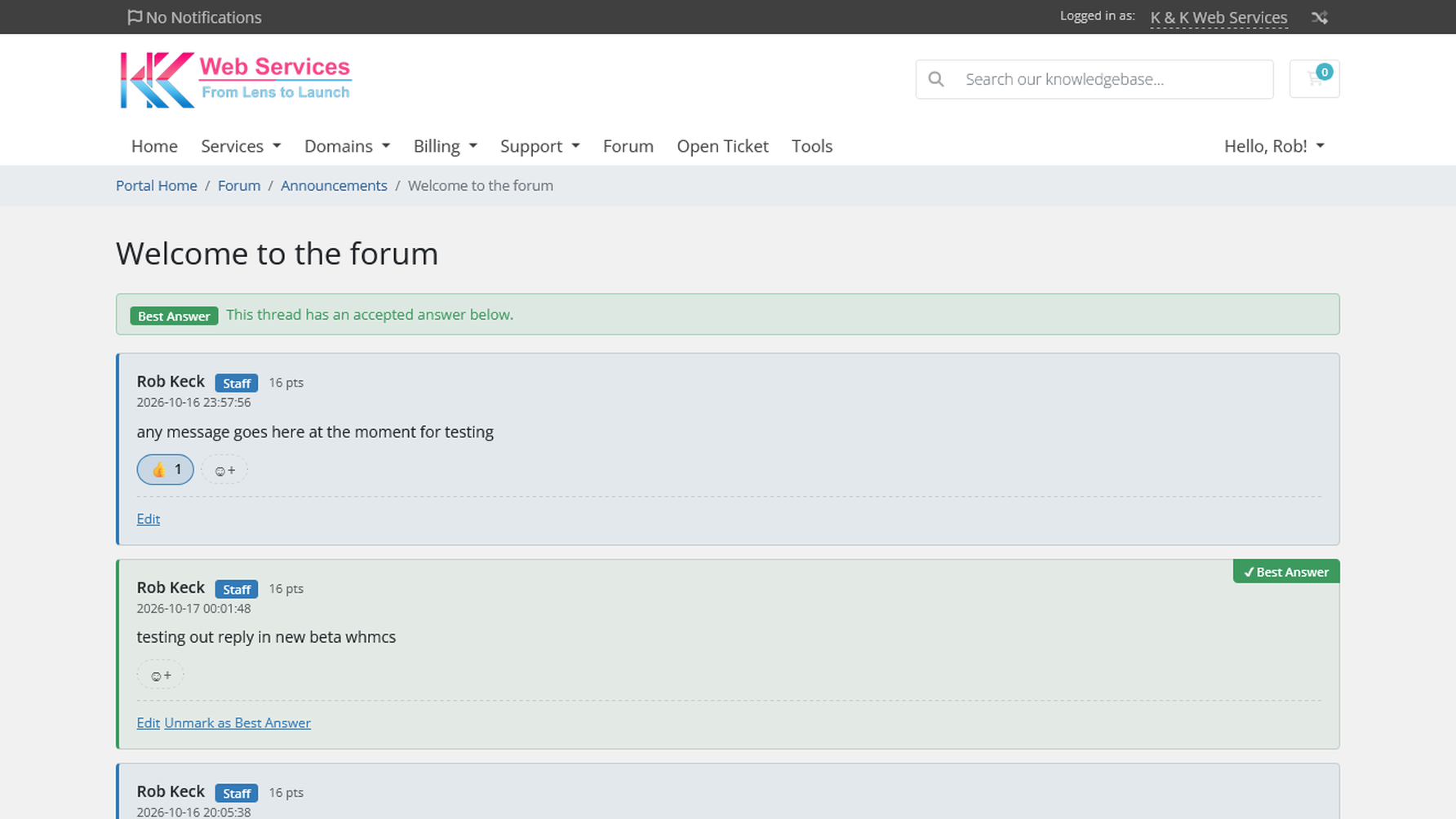
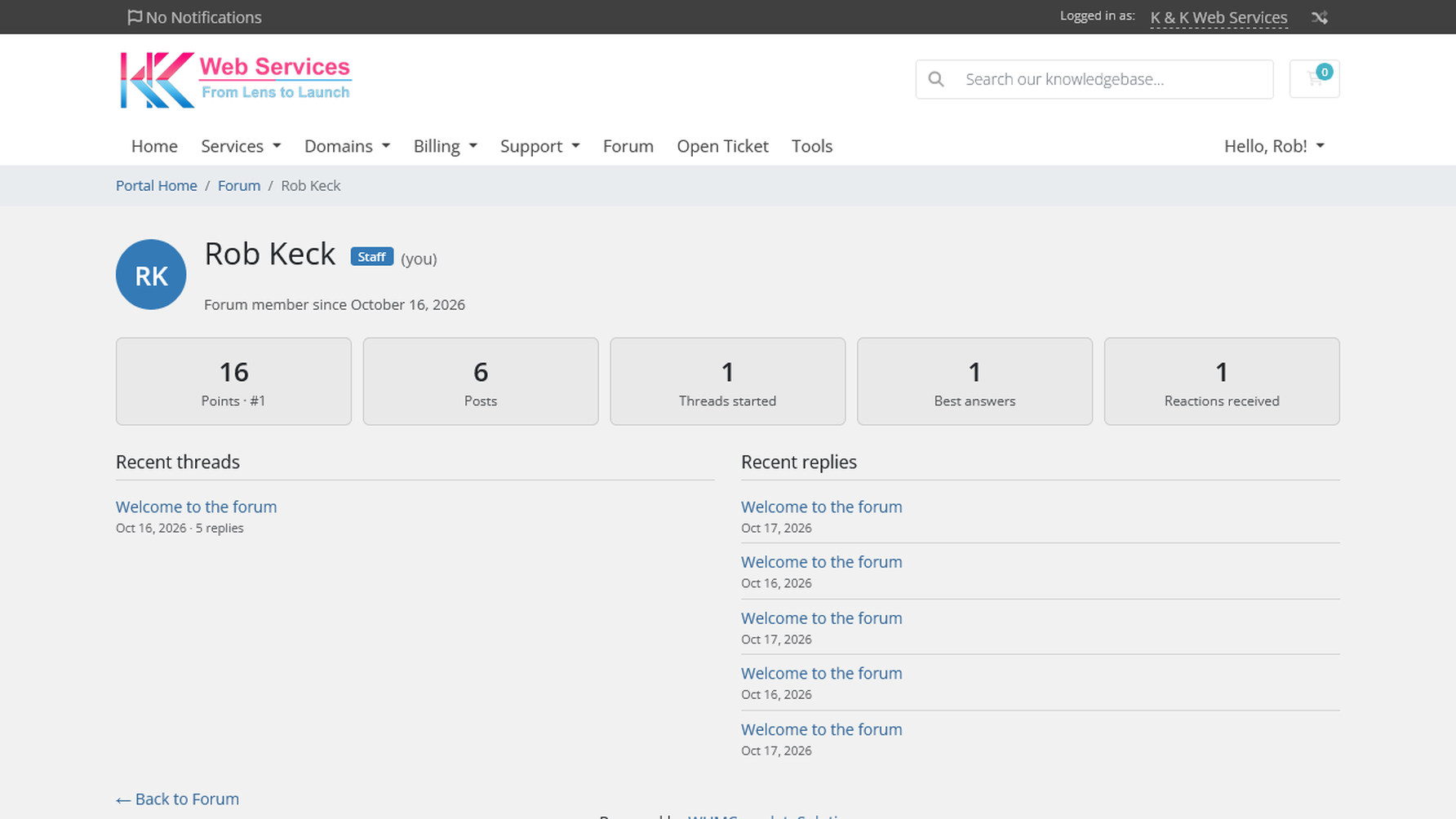
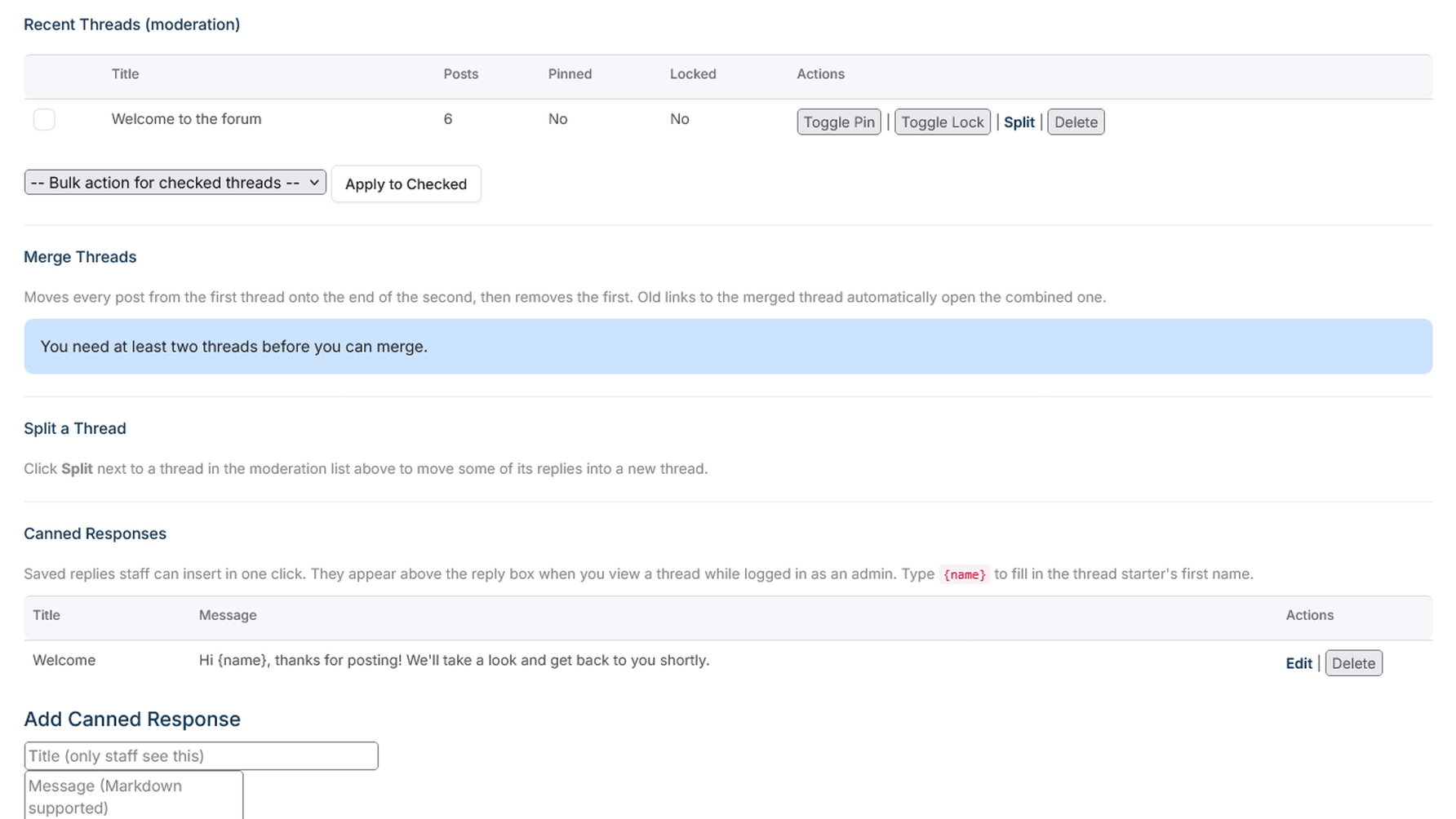
Hi everyone, Client community Pro is now live on the WHMCS Marketplace. It adds a full community community inside your WHMCS client area, using your clients’ existing logins, so there’s no separate community account or extra software to run. Why a community? The same few questions land in most ticket queues every week. A community lets clients answer each other, and the answers stay searchable for the next person. You can also promote a ticket into a public thread in one click when the answer will help others. Features Categories and boards, with boards restricted by product if you want Markdown editor, full-text search, karma, best answers and leaderboards Ticket-to-thread promotion Reactions, member profile pages and @mentions Canned responses, merge and split threads, and bulk moderation Spam filter, scheduled announcements and an audit log of admin actions Multi-staff assignment with alerts Slack and Discord notifications English and Spanish language files Pricing $39.99 one-time, with 12 months of updates and support included. A free version with the core community features is also available, if you’d like to try it first. Pro installs over it and keeps all your data. WHMCS Marketplace: https://marketplace.whmcs.com/product/9175-client-community-pro Details and screenshots: https://knkws.com/whmcs-client-community/ Happy to answer any questions here.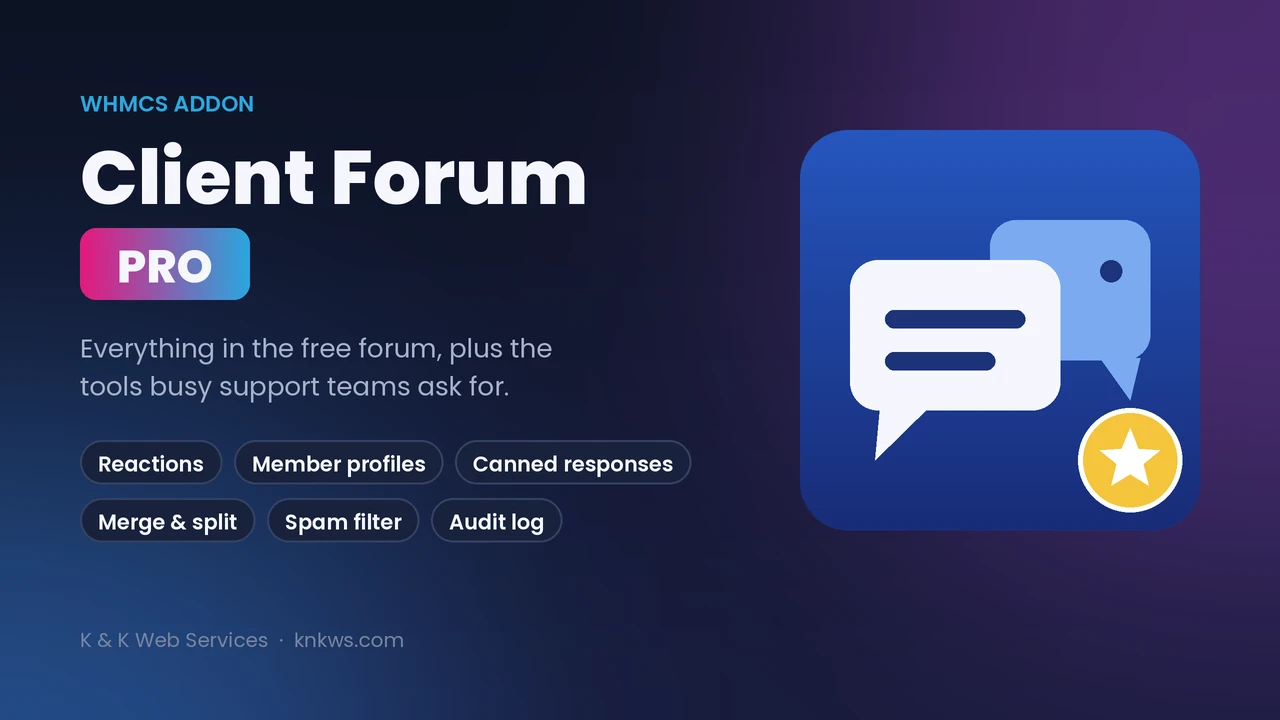
-
 Thanks for clarifying that, Vaishnaviiii — the override point is easy to miss if you assume the option adds on top of the base limit. One practical tip is to word the option clearly on the order page, for example stating the total limit that will apply, so clients are not surprised by a bill later. It is also worth testing with a test order first and checking the generated invoice, since that quickly shows whether the limit behaved as expected. Did you end up setting the option to the combined total you wanted, or did you go with a custom approach for additive limits?
 -
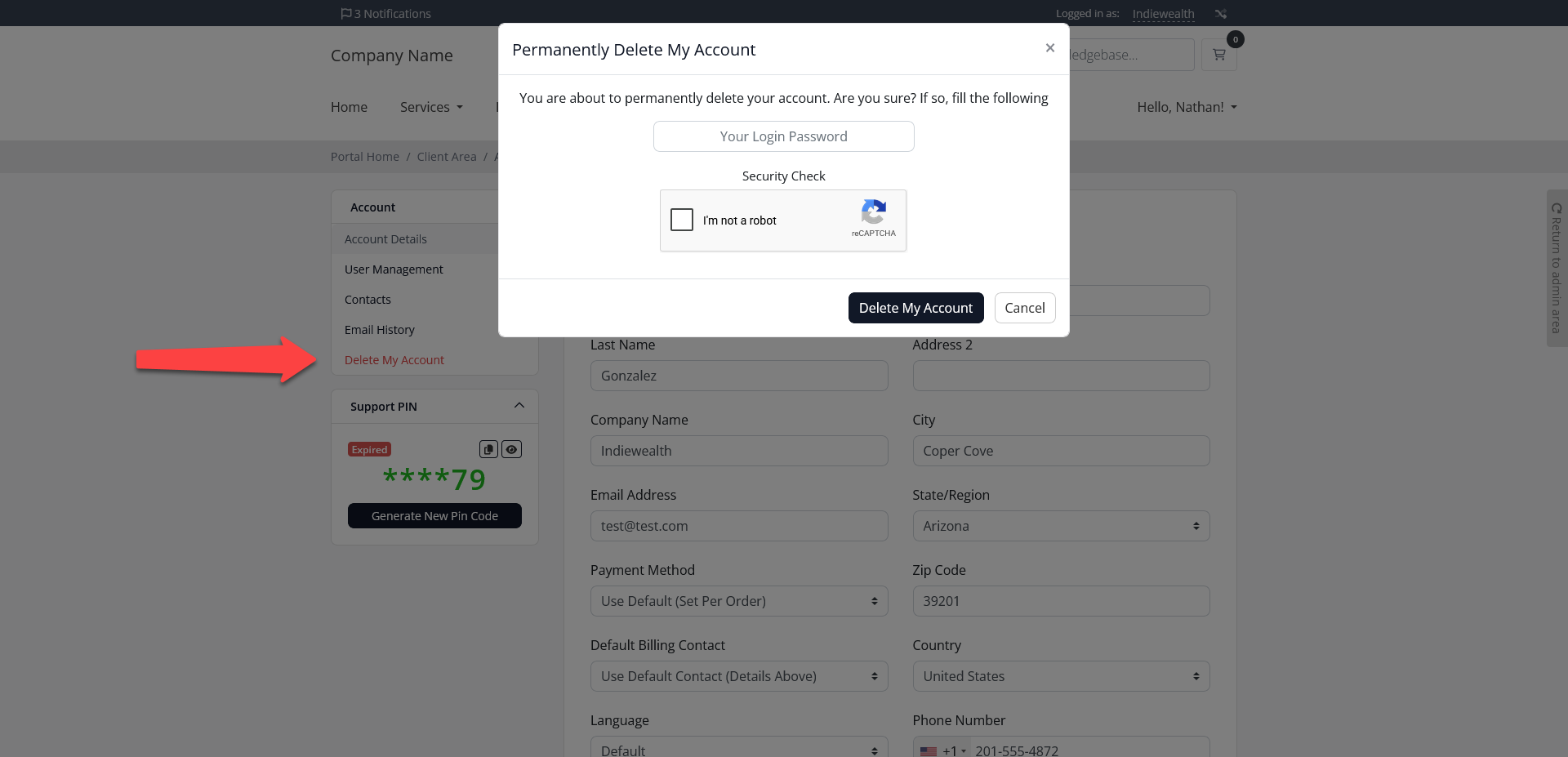
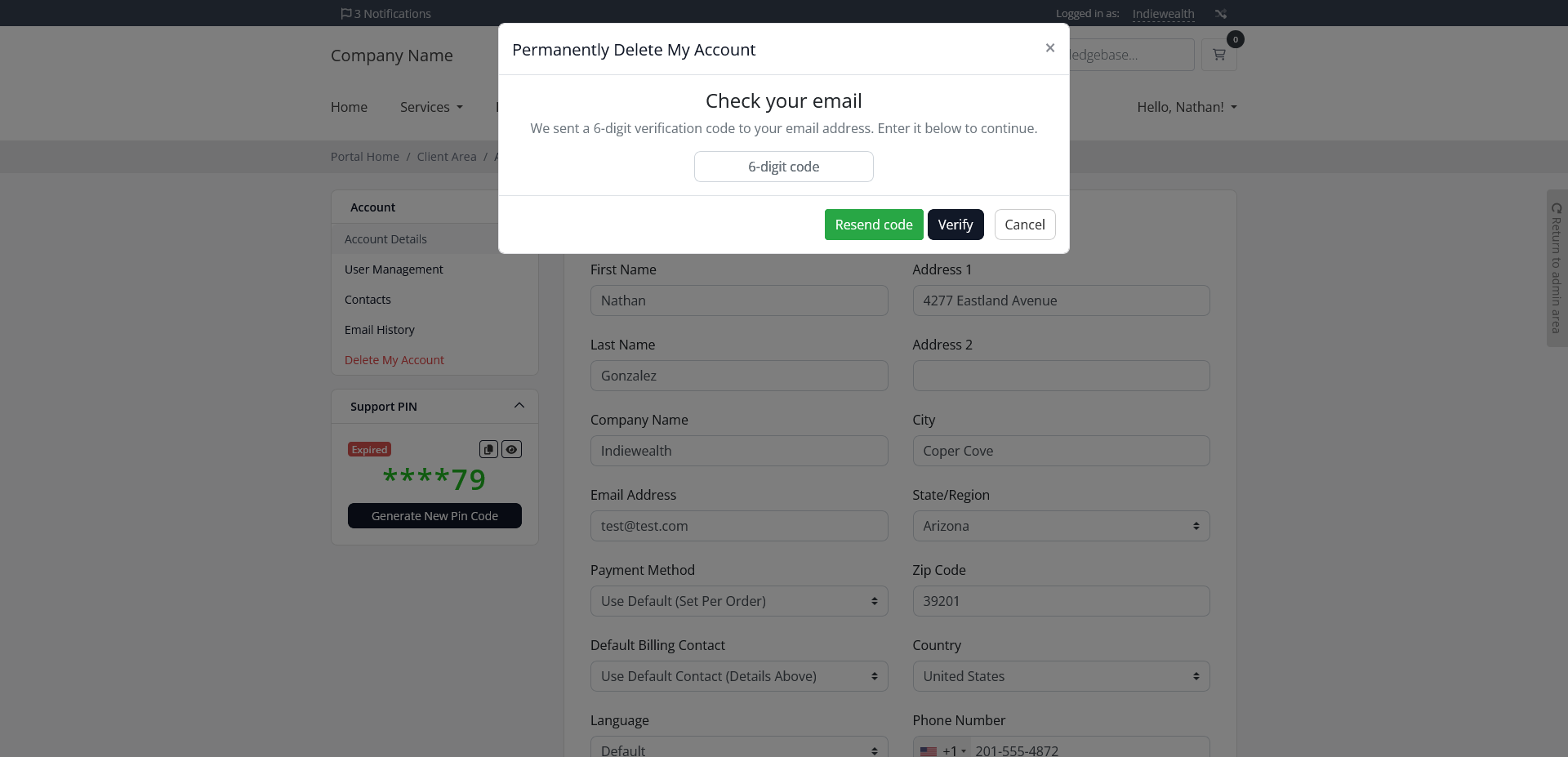
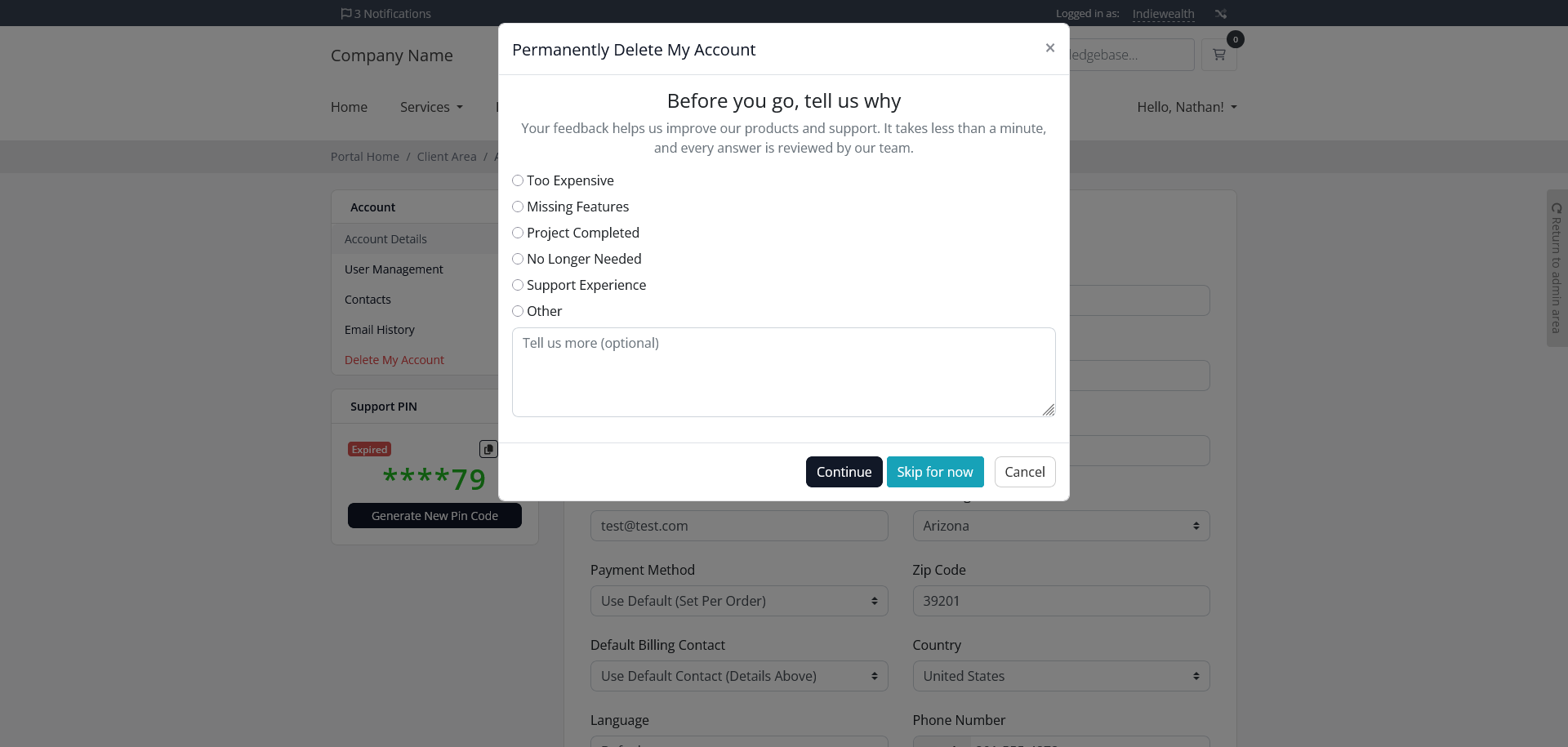
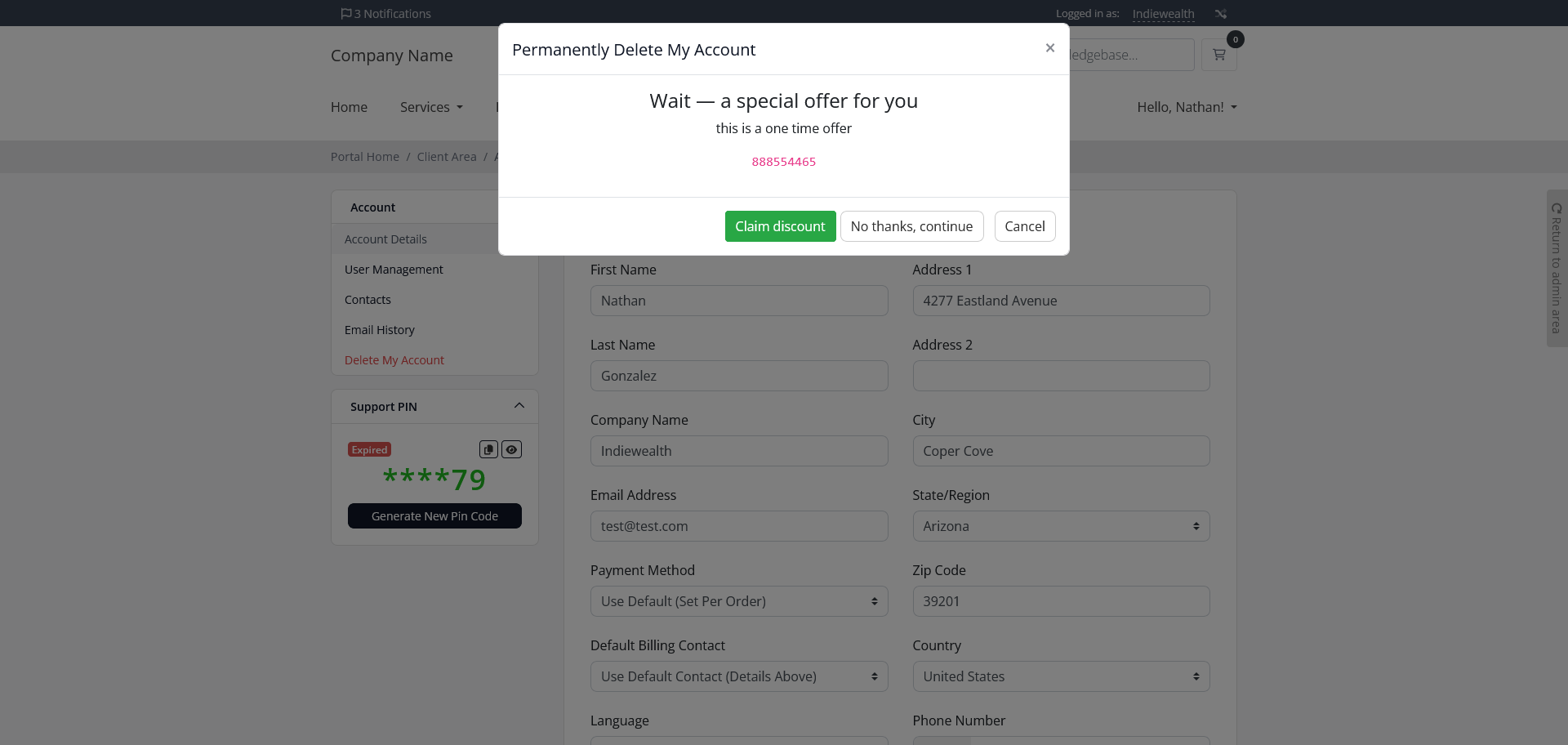
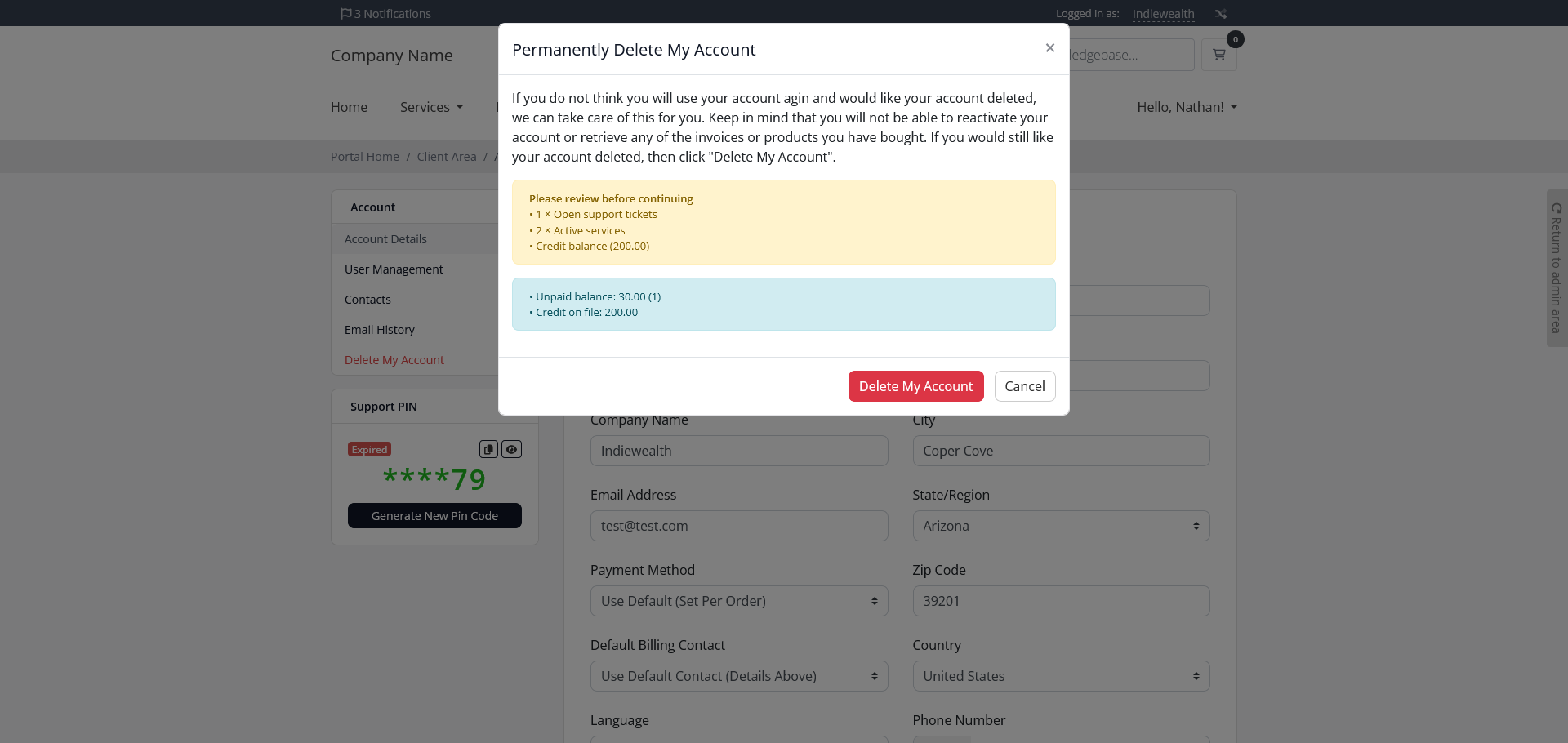
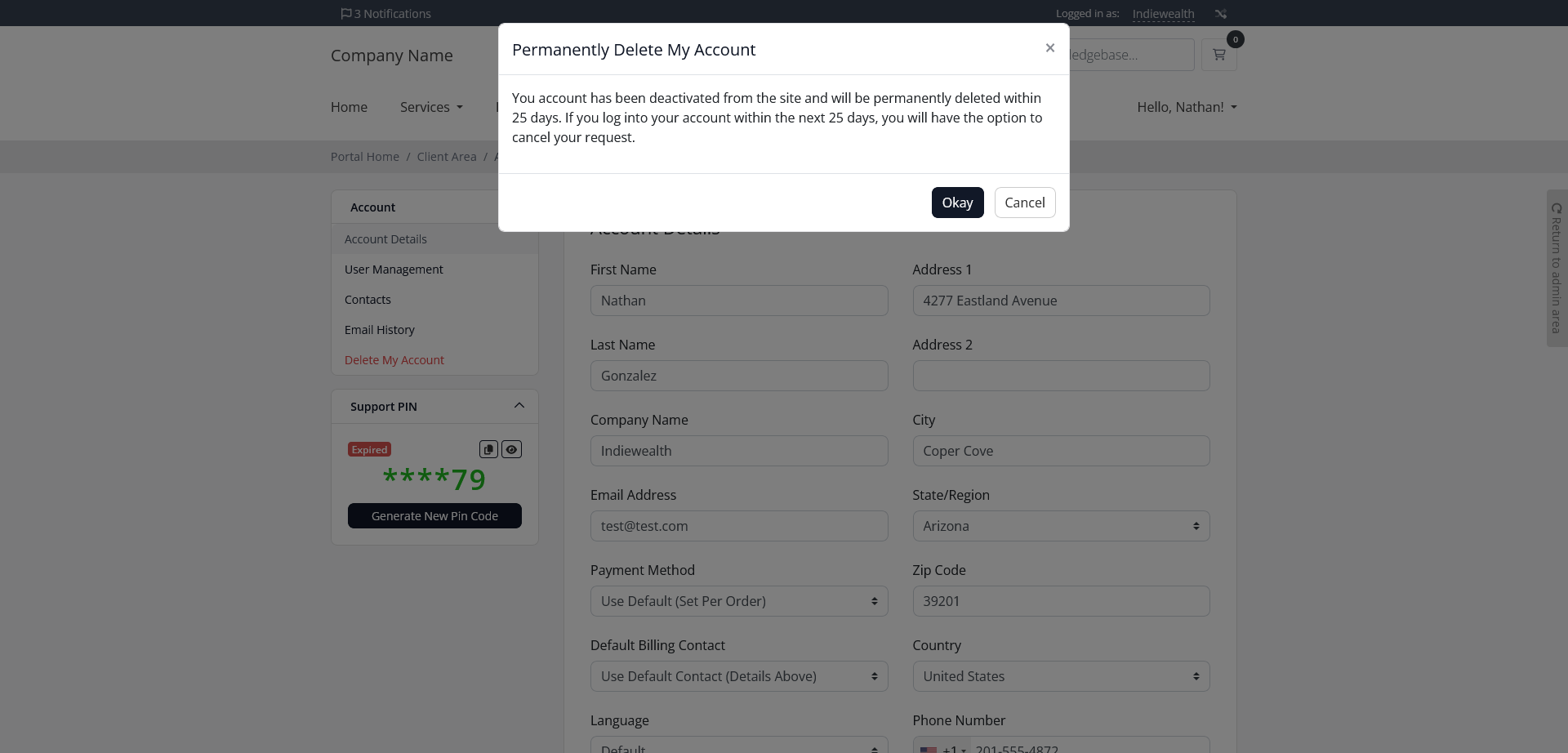
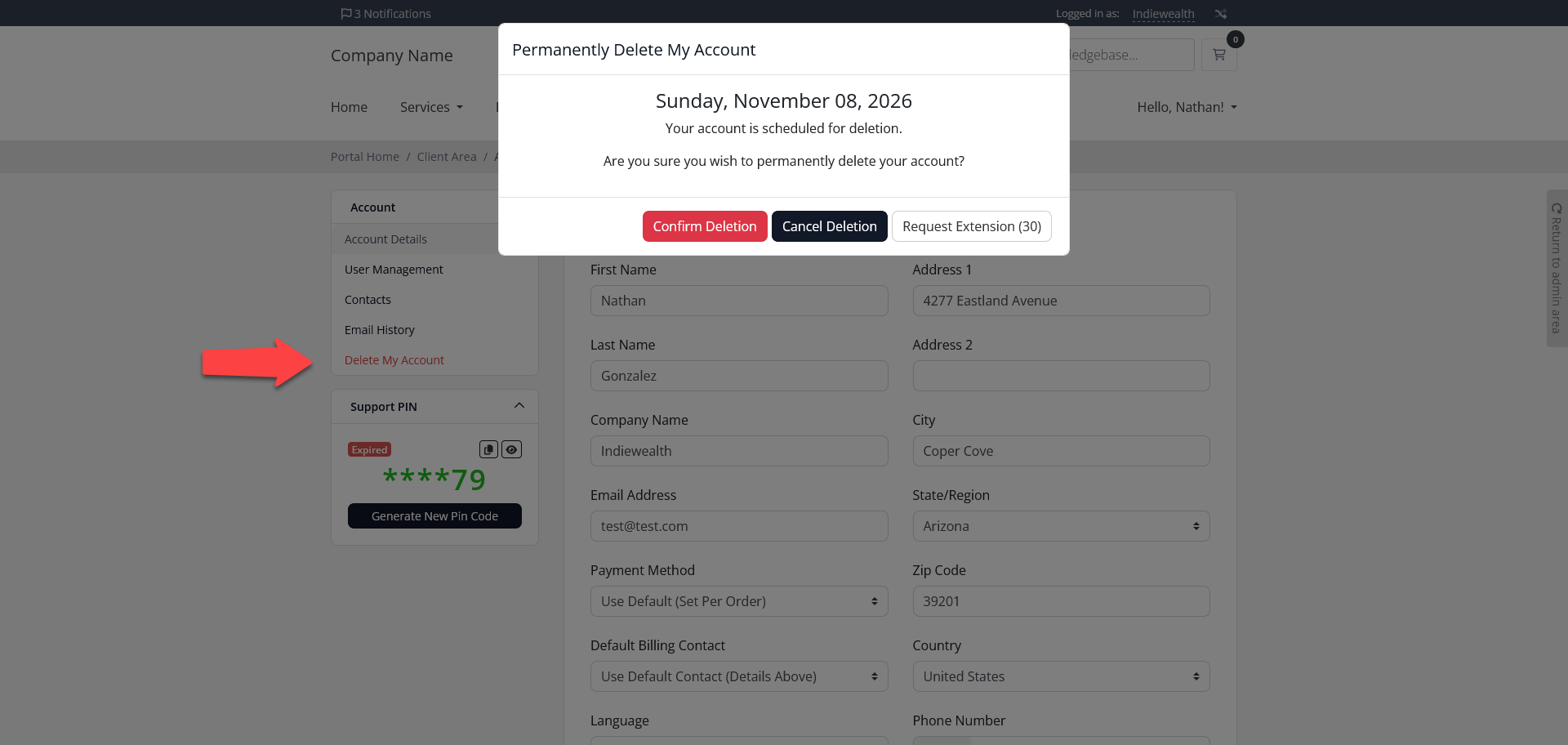
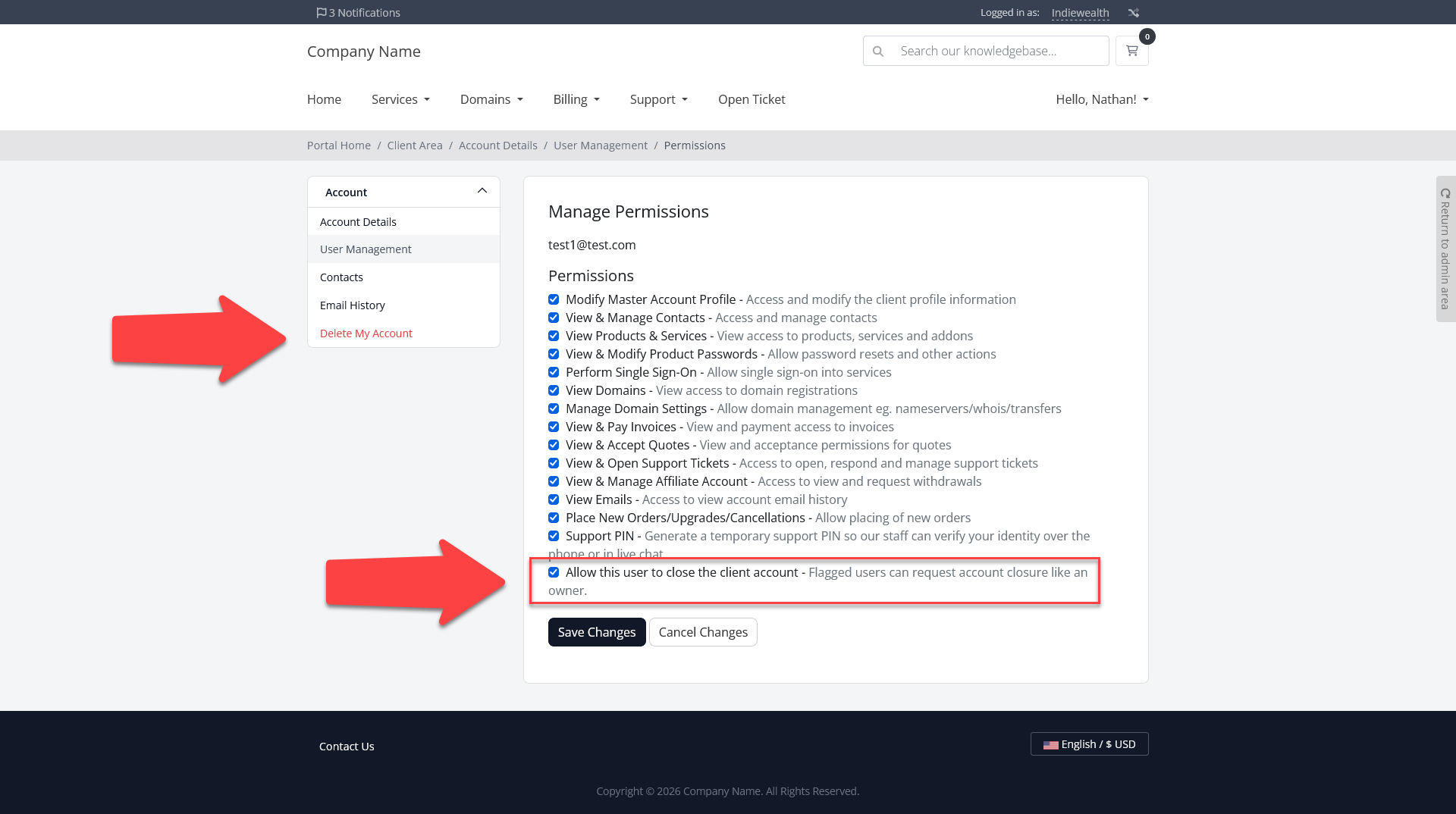
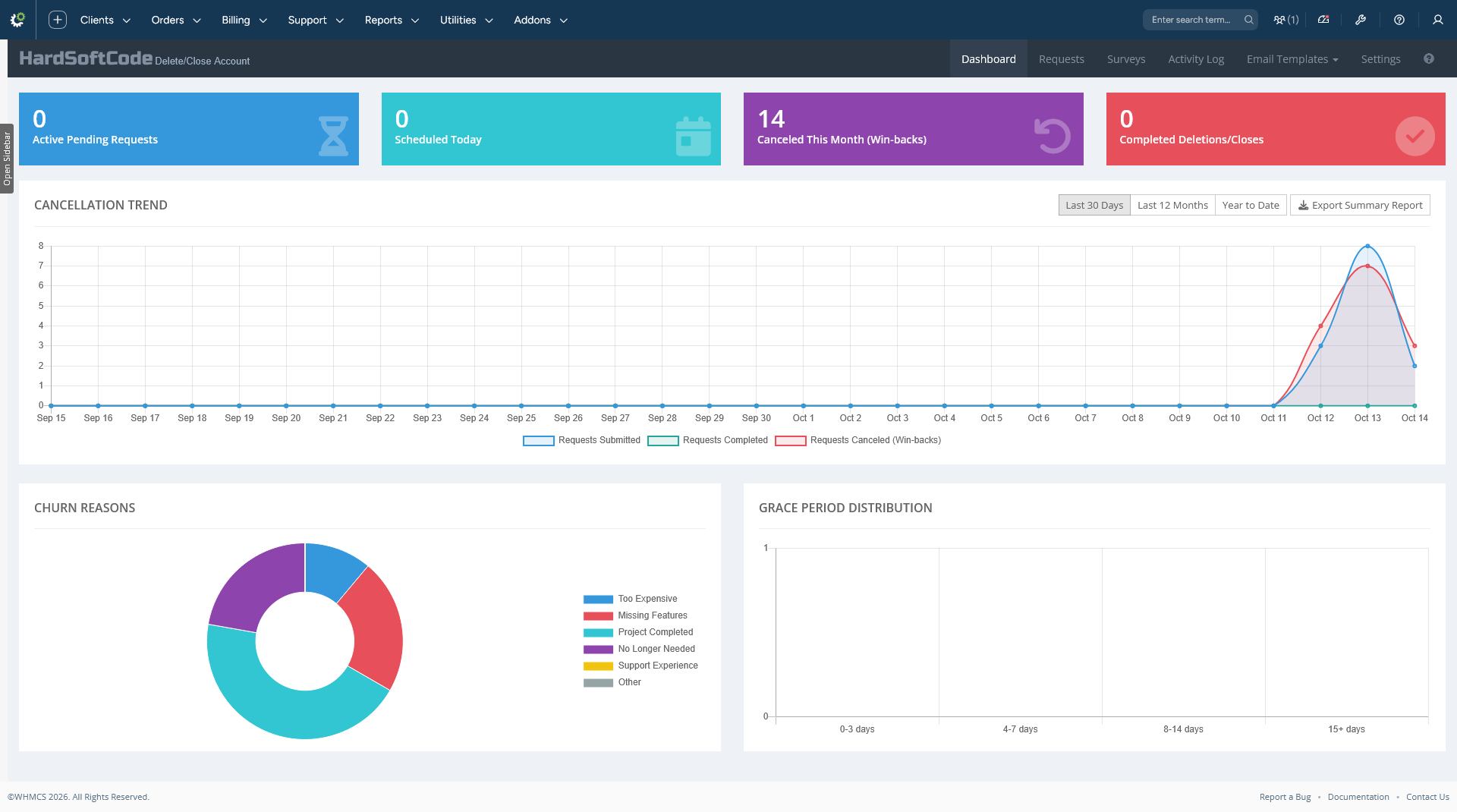
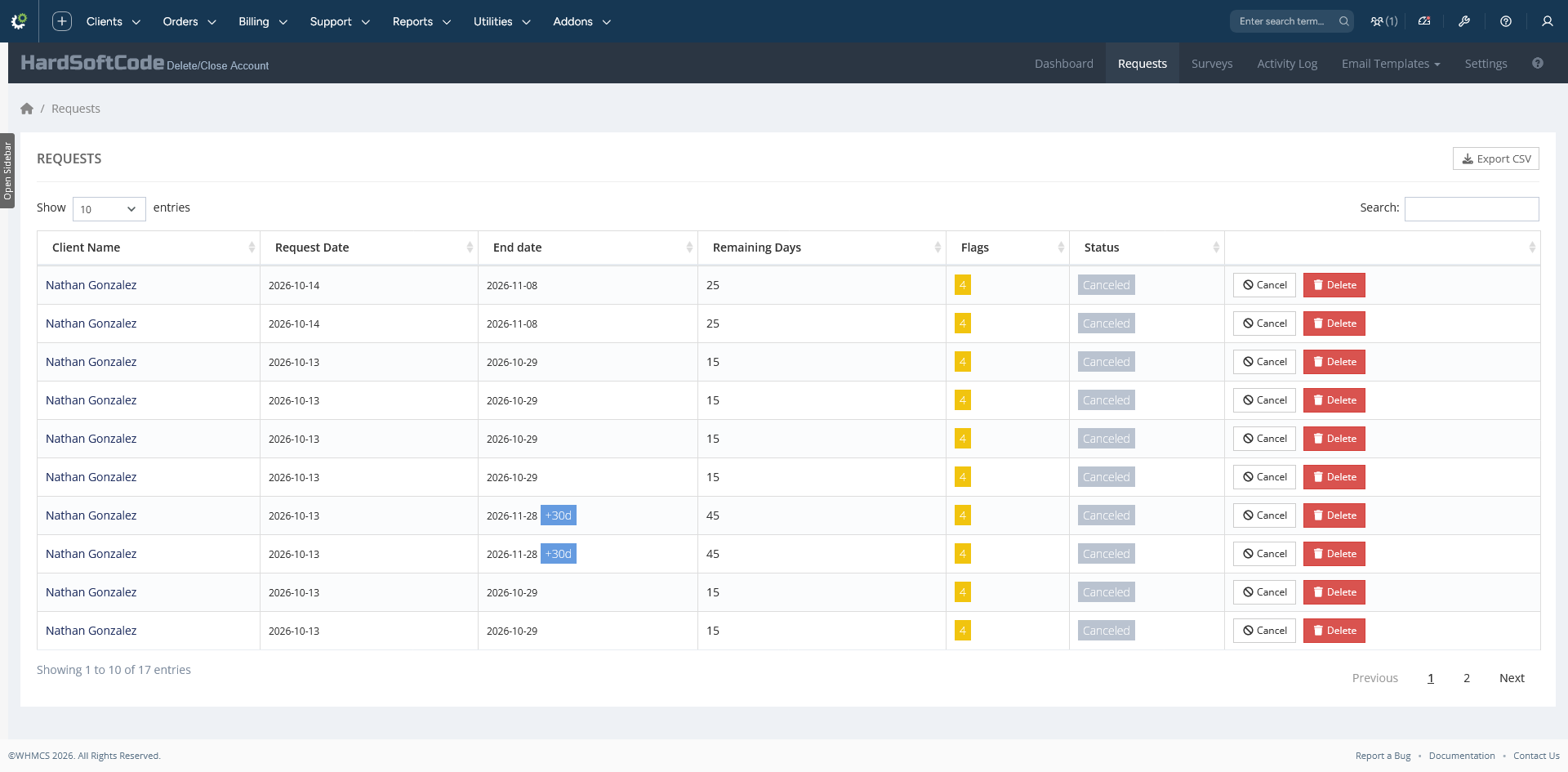
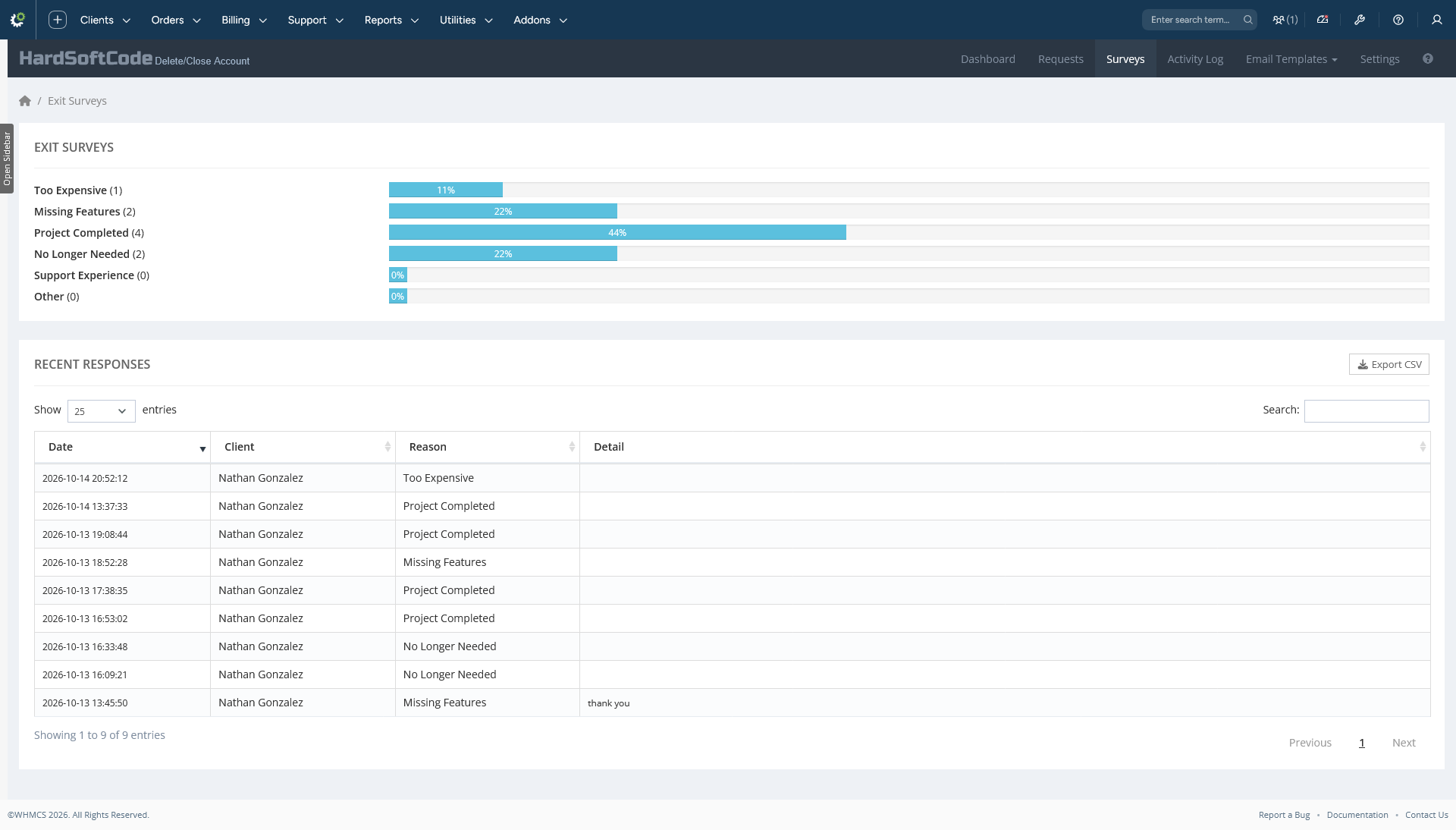
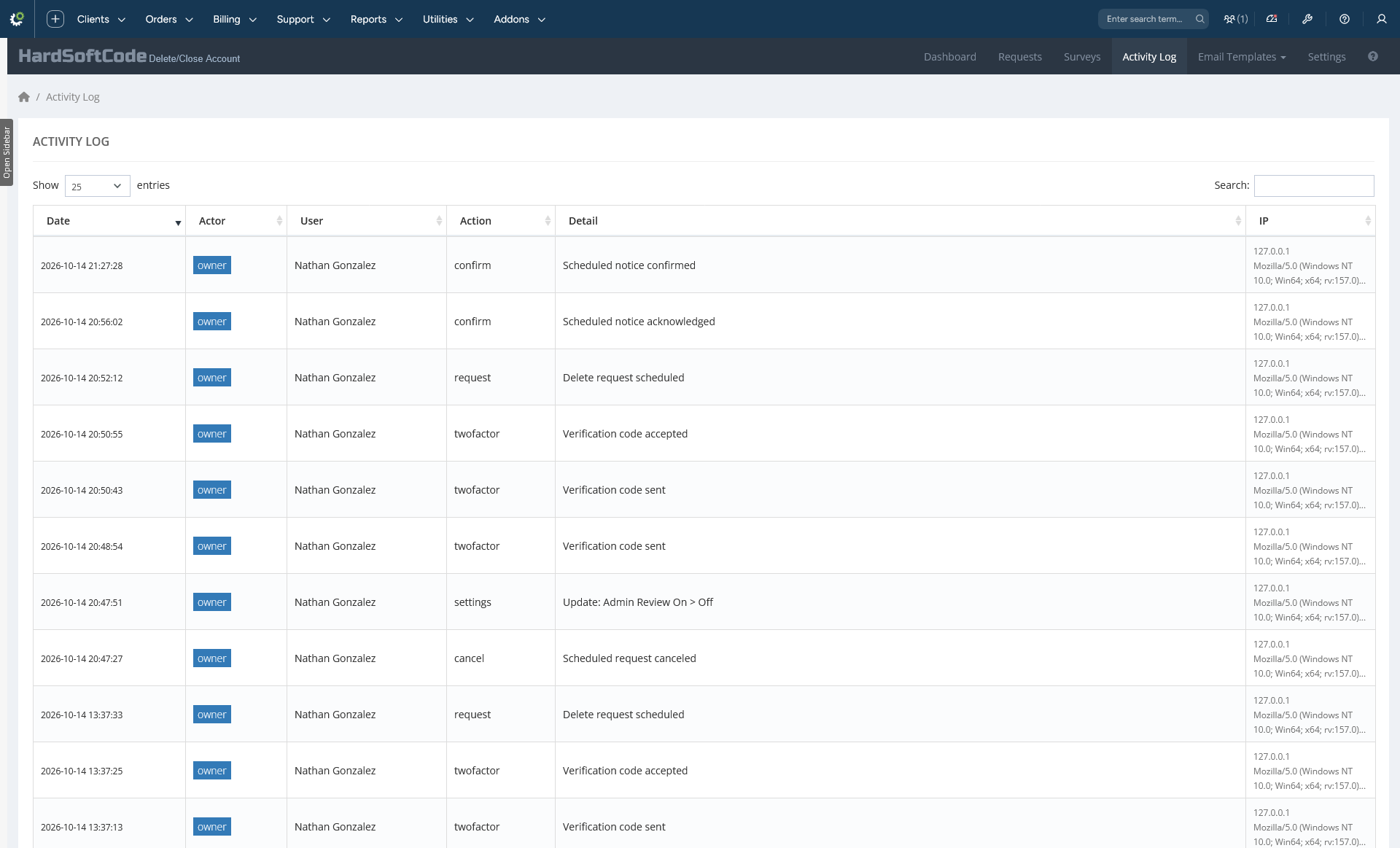
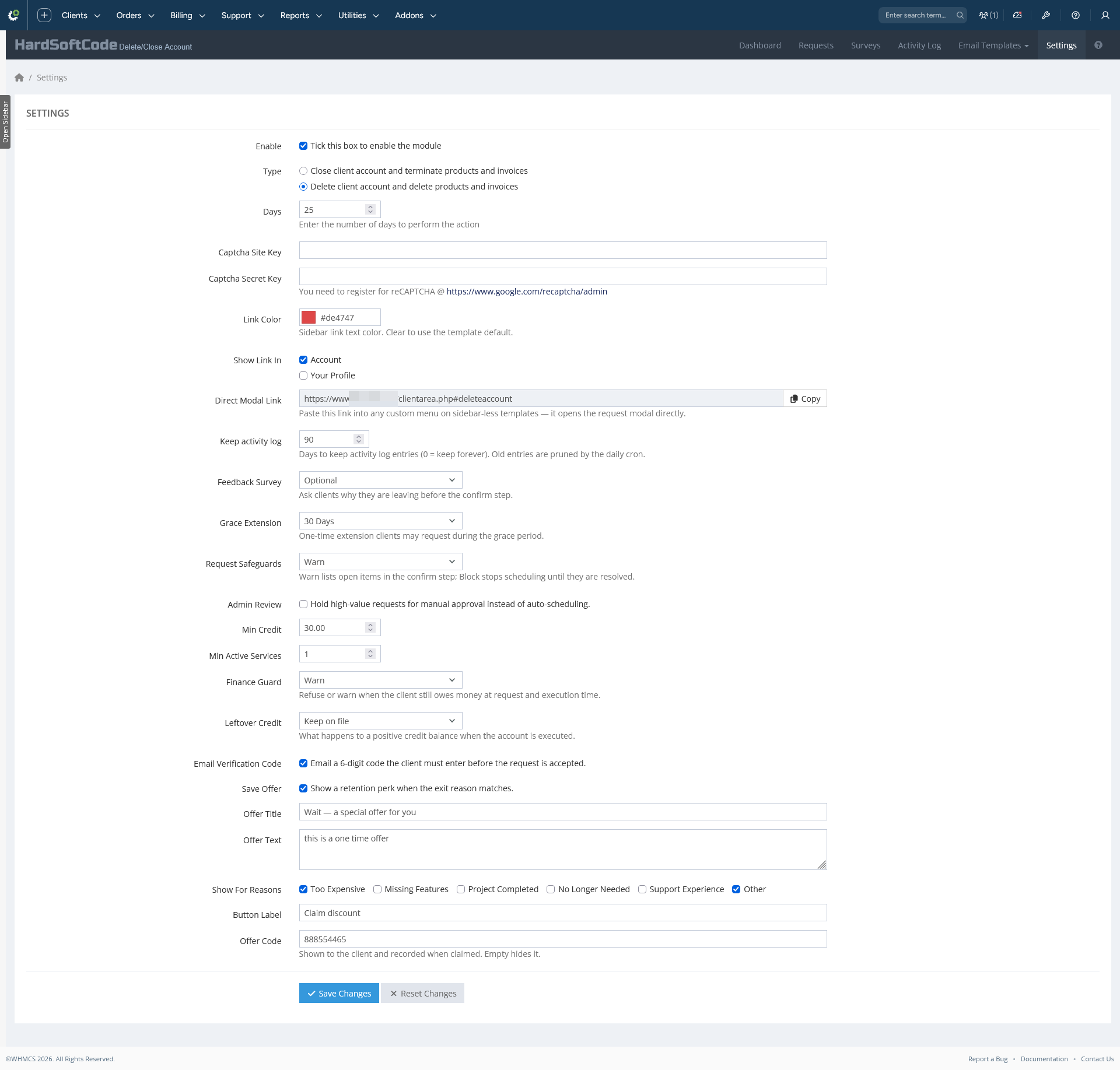
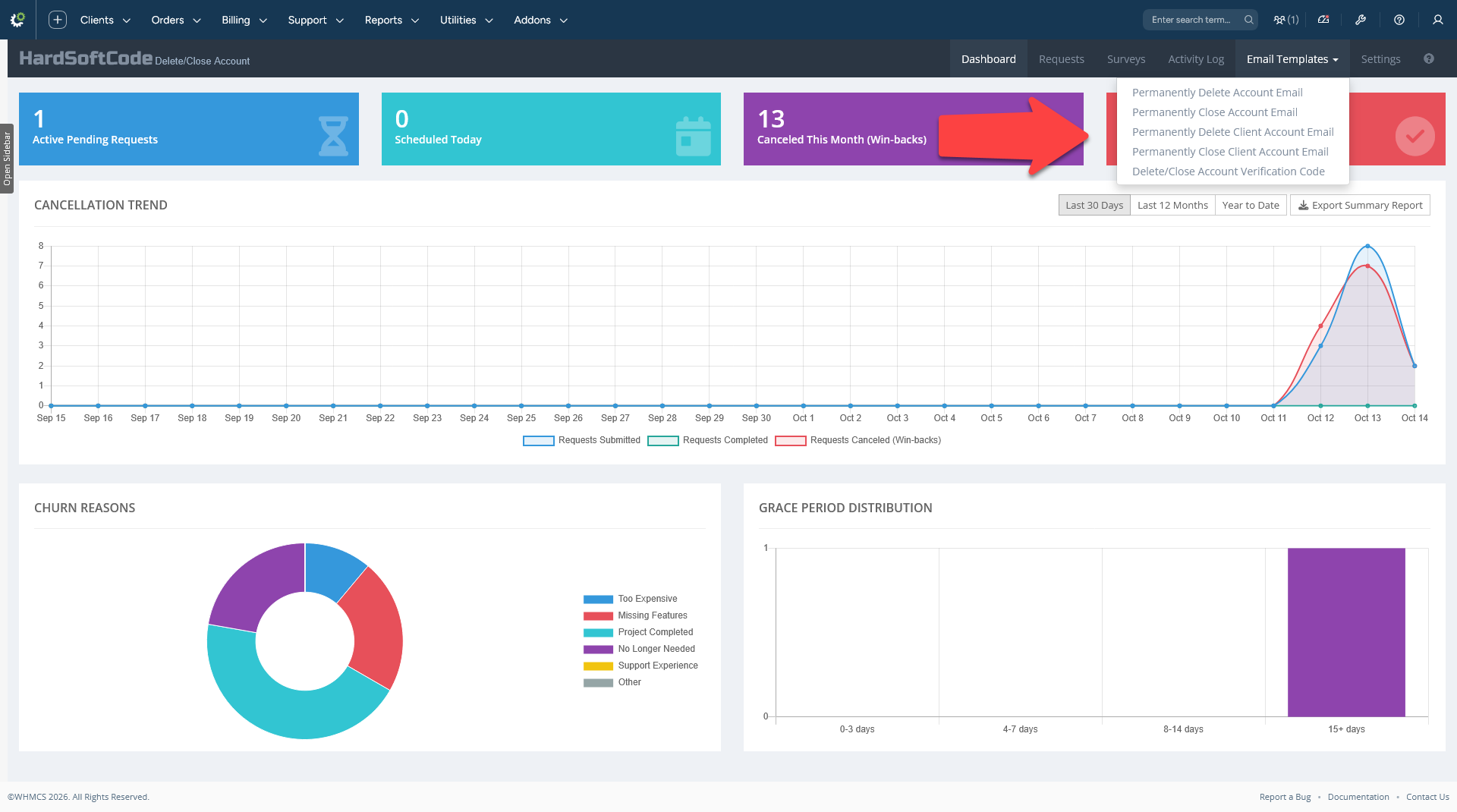
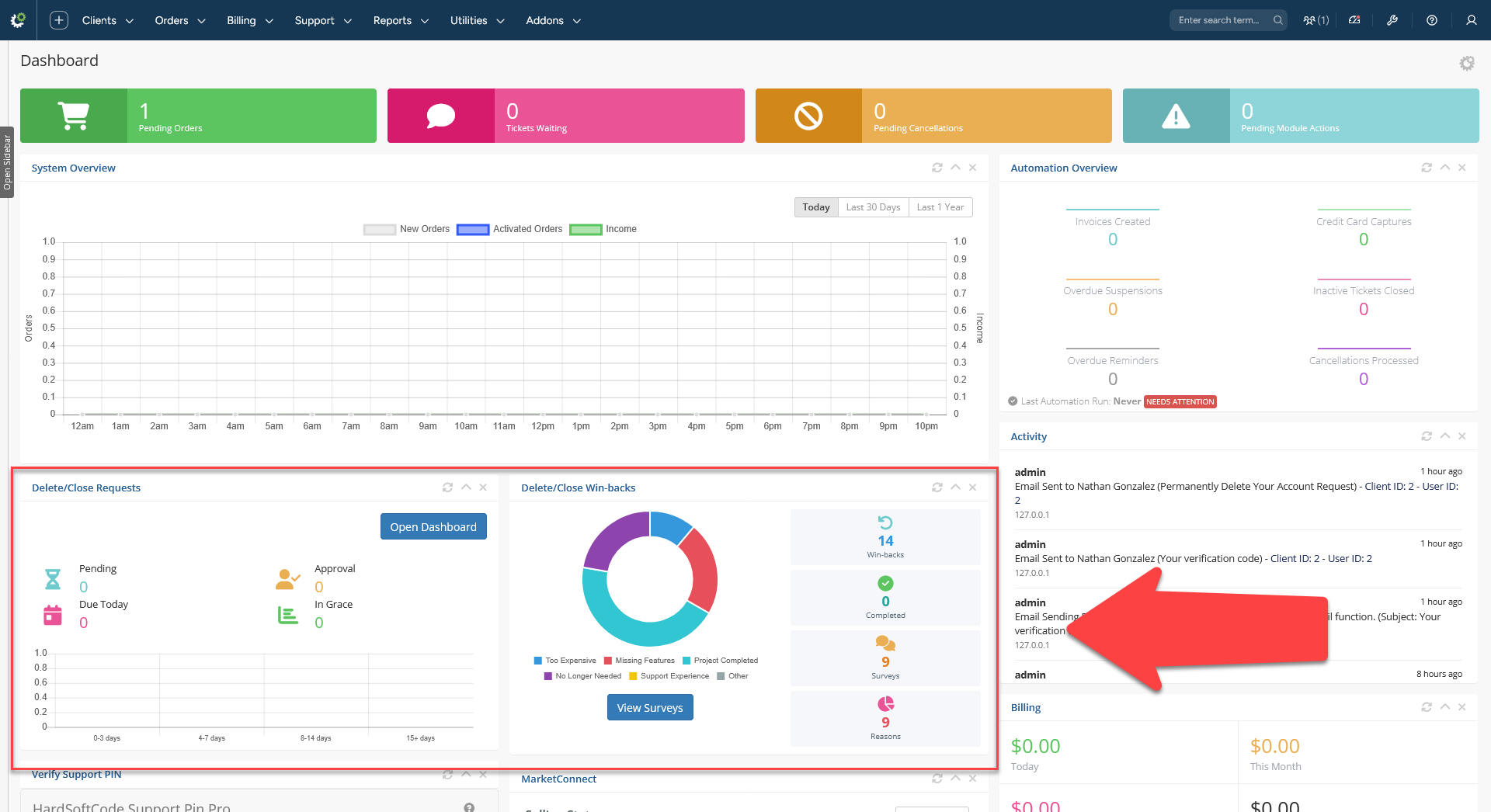
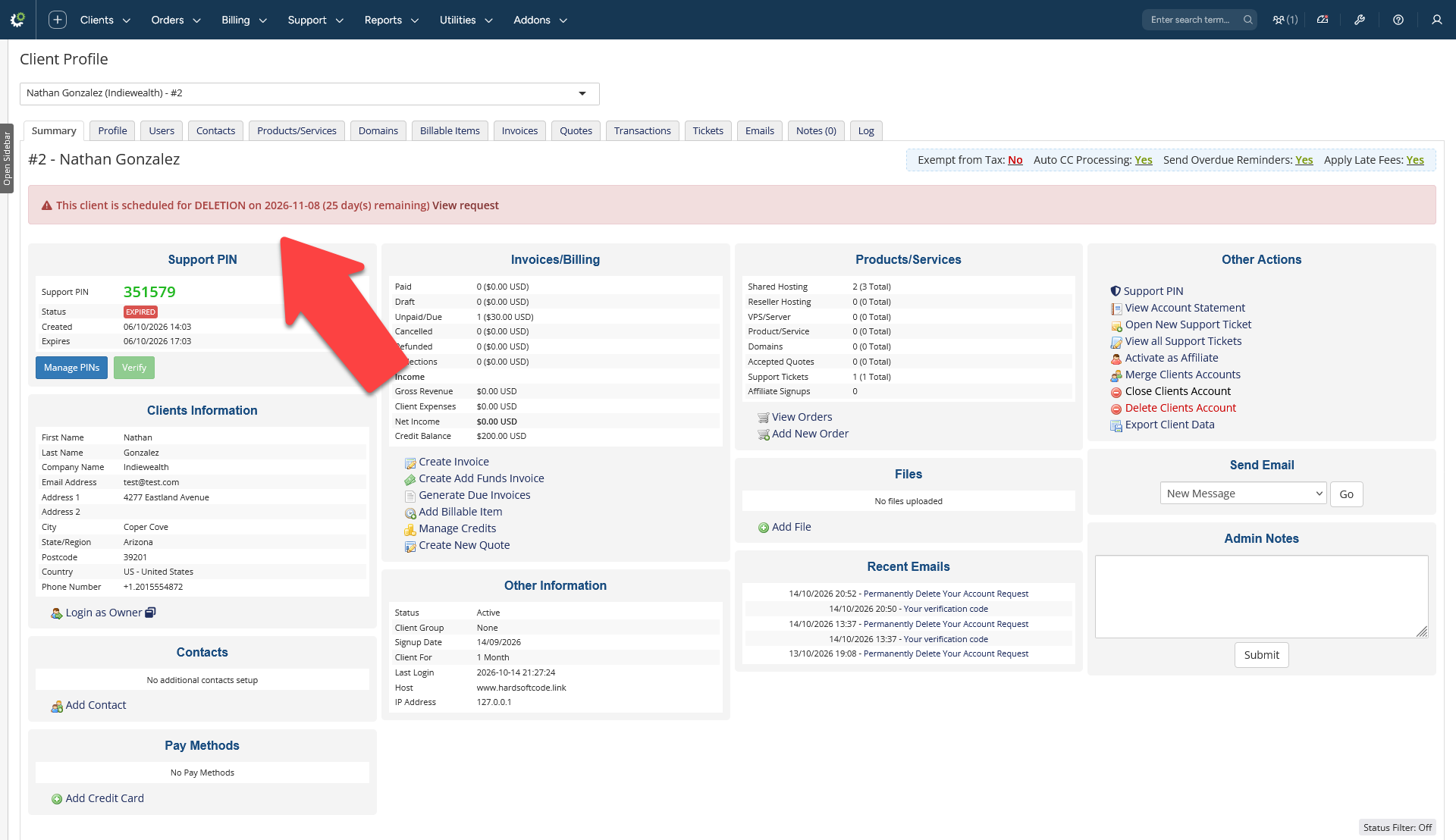
Give clients the ability to request account closure or deletion from the client area — with password confirmation, optional captcha, an optional emailed verification code, a grace period they can extend once, client and admin email notifications, and automatic execution by the daily cron. Before they go, an exit survey captures why they are leaving, matching answers can trigger a win-back discount offer, and pre-closure safeguards flag unpaid invoices, open tickets, pending transfers, active services and leftover credit. High-value requests can be held for manual admin approval, a finance guard blocks or warns on unpaid balances while leftover credit is kept, applied to invoices or forfeited, and the analytics dashboard tracks pending requests, win-backs, churn reasons and grace distribution with CSV exports throughout. Requests are managed from the admin area, every action is audit-logged with actor attribution and IP, sub-user access is permission-controlled, and the whole flow runs in native WHMCS modals on any template, with or without sidebars. Owned License ($40.00) - https://www.hardsoftcode.com/cart/link/deleteclose-account-for-whmcs/owned Source Code License ($280.00) - https://www.hardsoftcode.com/cart/link/deleteclose-account-for-whmcs/source Features Client self-service Sidebar link (Close/Delete My Account, translated) in the configured panels — Account and/or Your Profile, primary and secondary sidebars — with a configurable text color. WHMCS-native modal flow: password confirmation (with optional reCAPTCHA) → warning/confirm step → done notice. No custom dialog libraries. Scheduled-request notice: clients who log back in while a request pends get a locked modal (date + notice) that cannot be dismissed — owners choose Confirm or Cancel in the footer; sub-users without permission get Logout only. Deep link for sidebar-less templates: any client-area URL ending in #deleteaccount (e.g. clientarea.php#deleteaccount) opens the modal — paste it into any custom menu. Sub-user permissions: owners can flag individual users on the /account/users//permissions page (new checkbox, same styling); flagged users may run the flow like owners. Grace period & execution Configurable grace period in days (close or delete mode); the request date and end date show in the admin grid with remaining-days countdown. Daily cron executes due requests via closeclient / deleteclient and prunes the activity log per retention. Emails: client notice + admin notification (with client details and admin link) on scheduling, using five seeded templates (close/delete notices + verification code) with merge fields registered in the editor. Admin & audit Analytics dashboard (landing tab): KPI cards (pending, due today, win-backs, completed), cancellation-trend line chart with range switcher, churn-reason doughnut, grace-distribution bar, summary CSV export. Requests grid (DataTables): client link, request/end dates, remaining days, requested/canceled badges, token-protected cancel/delete with SweetAlert2 confirms. Client summary alert: any client profile with a live request shows a red banner (schedule date, countdown, approval/extension state) linking to the Requests tab. Activity Log: every settings save, admin cancel/delete and client schedule/acknowledge/cancel, attributed to admin (username), owner (client name) or sub-user (name), with per-actor colors, request IP + browser user-agent, DataTables search/sort/paging and day-based retention. AJAX settings with top-right toast confirmations and session-expiry handling; MiniColors picker for the sidebar link color. Every save writes one log entry listing exactly what changed (Days 15 > 30; Finance Guard warn > block). Admin homepage widgets: pending queue (stats + grace bar) and win-back pulse (stats + churn doughnut); enable them from the homepage Customize panel. Changelog v2.0.0 Fresh rewrite on the modern addon architecture (namespaced classes, Smarty admin + client templates, WHMCS-native modals). Expansion pillars (shipped) Exit survey (optional/required, stats + recent + DataTables). Win-back offers (reason-matched promo with claimed/dismissed tracking). Grace extension (+N days once, badge + modal notice, legacy-safe columns). Pre-closure safeguards (warn/block scan: invoices, tickets, transfers, services, credit; Flags column). Admin review (high-value requests held for approval: credit/services thresholds, Review badge + Approve action, locked client notice, cron skips unapproved). CSV exporter (requests + survey answers, Excel-friendly, logged). Finance guard (warn/block on unpaid balances at request + execution time; leftover credit kept, applied to invoices, or forfeited). Email verification code (optional 6-digit second factor, auto-sent on step open, 10-minute expiry, 5-attempt lockout) + request IP and browser user-agent on every activity-log entry. Analytics dashboard (default landing tab: KPI cards, Chart.js trend/survey/grace charts with range switcher, summary CSV export; cron logs completions). Client summary alert (red banner on profiles with a live request) + per-change settings audit (Days 15 > 30; secrets masked). Admin homepage widgets (pending queue + win-back pulse via AdminHomeWidgets, each with stats and a mini chart). New features WHMCS-modal request flow (password → confirm → done; locked scheduled notice). Analytics dashboard as the default landing tab (KPI cards, Chart.js trend/survey/grace charts, summary CSV export). Sub-user permission checkbox on the core permissions page with owner-or-flagged enforcement everywhere. Sidebar-less deep link (#deleteaccount) with copy button in Settings. Activity log with admin/owner/sub attribution, retention and cron pruning. Sidebar link color picker; Account/Your Profile panel toggles across both sidebars. AJAX admin (toasts, SweetAlert2 confirms, DataTables grids, MiniColors). Updates & improvements Legacy mod_* data auto-migrates on activation without overwriting. Email templates seeded only when missing (re-activation can't duplicate). Cron condition fixed (due + pending only); merge-field editor guards. Captcha remote-IP, unserialize and token handling hardened. Fixes Late sidebar priority so the Account panel exists before linking. Beacon-era click work replaced by modal POSTs; session-expiry redirects detected. Captcha render races, footer button timing, modal lifecycle resets.
-
This is malformed <a href='href=https://socialbee.com/calendar/'> link found in /www/wwwroot/orders.systron.net/lang/farsi.php:$_LANG['store']['socialbee']['faq']['a2']['i2'] = "Support through <a href='href=https://socialbee.com/calendar/'>calls</a>, chat, or email communication. We’re one of the few social media tools still offering on-call support."; /www/wwwroot/orders.systron.net/lang/romanian.php:$_LANG['store']['socialbee']['faq']['a2']['i2'] = "Support through <a href='href=https://socialbee.com/calendar/'>calls</a>, chat, or email communication. We’re one of the few social media tools still offering on-call support."; /www/wwwroot/orders.systron.net/lang/ukrainian.php:$_LANG['store']['socialbee']['faq']['a2']['i2'] = "Support through <a href='href=https://socialbee.com/calendar/'>calls</a>, chat, or email communication. We’re one of the few social media tools still offering on-call support."; /www/wwwroot/orders.systron.net/lang/russian.php:$_LANG['store']['socialbee']['faq']['a2']['i2'] = "Support through <a href='href=https://socialbee.com/calendar/'>calls</a>, chat, or email communication. We’re one of the few social media tools still offering on-call support."; /www/wwwroot/orders.systron.net/lang/arabic.php:$_LANG['store']['socialbee']['faq']['a2']['i2'] = "Support through <a href='href=https://socialbee.com/calendar/'>calls</a>, chat, or email communication. We’re one of the few social media tools still offering on-call support."; /www/wwwroot/orders.systron.net/lang/english.php:$_LANG['store']['socialbee']['faq']['a2']['i2'] = "Support through <a href='href=https://socialbee.com/calendar/'>calls</a>, chat, or email communication. We’re one of the few social media tools still offering on-call support."; /www/wwwroot/orders.systron.net/lang/hebrew.php:$_LANG['store']['socialbee']['faq']['a2']['i2'] = "Support through <a href='href=https://socialbee.com/calendar/'>calls</a>, chat, or email communication. We’re one of the few social media tools still offering on-call support."; /www/wwwroot/orders.systron.net/lang/portuguese.php:$_LANG['store']['socialbee']['faq']['a2']['i2'] = "Support through <a href='href=https://socialbee.com/calendar/'>calls</a>, chat, or email communication. We’re one of the few social media tools still offering on-call support."; The only change is removing the extra href= inside the single quotes. Solution: cd /www/html/WHMCS/lang/ sed -i "s|href='href=https://socialbee.com/calendar/'|href='https://socialbee.com/calendar/'|g" english.php farsi.php romanian.php ukrainian.php russian.php arabic.php hebrew.php portuguese.php
-
 Enabling Configuration → System Settings → General Settings → Localisation With Dynamic Field Translations enabled, Product Duplicate runs until the PHP-FPM/Nginx timeout. PHP-FPM slowlog shows execution repeatedly inside WHMCS core classes: WHMCS\Language\Loader\DatabaseLoader, DynamicTranslation, Sanitize::purifyHtml(), and HTMLPurifier. With it disabled, the exact same operation completes within seconds. WHMCS Admin: Configuration → System Settings → Products/Services Action: Duplicate Product Dynamic Field Translations ENABLED: - request runs >300 seconds - ends in 504 Gateway Timeout Dynamic Field Translations DISABLED: - same product duplicates within seconds PHP-FPM slowlog: script_filename = .../ordadmin/configproducts.php Stack: convertFromUTF8() HTMLPurifier::purify() WHMCS\Input\Sanitize::purifyHtml() WHMCS\Language\DynamicTranslation::getTranslationAttribute() WHMCS\Language\Loader\DatabaseLoader::load() Symfony Translation\Translator...
 -
Can't say for sure if your installation isn't compromised or that WHMCS has changed something in the licensing server that broke your really old license, but that IP appears fine for WHMCS.
-
 Hi everyone, We're running a festive sale at WHMCS Global Services to celebrate Diwali and Halloween. If you've been planning to add new features to your WHMCS setup, upgrade your client area, or try one of our modules, this is a good time to take a look. Here are the offers available during the sale: 20% OFF on monthly plans — Use code FESTIVE20 30% OFF on annual plans — Use code FESTIVE30 50% OFF on open-source code — Use code FESTIVE50 WHMCS Themes If you're looking to refresh the design of your WHMCS client area or admin interface, check out our themes and templates: HostX WHMCS Theme CloudX WHMCS Theme TwentyX WHMCS Theme AdminX WHMCS Admin Theme ClientX WHMCS Template One Step Checkout VueJS + WHMCS One Step Checkout WHMCS Modules We also have modules for hosting automation, domain management, billing, and infrastructure provisioning. Cloudflare WHMCS Module VMware WHMCS Module Proxmox VPS WHMCS Module Passkey WHMCS Module Qatar .qa Domain Registrar Module .in Registry Domain Registrar Module Account Statement Module WHMCS GST Module - India Partial Payment WHMCS Module Pay Invoice without login WHMCS Module These are just some of the products available. We offer many more WHMCS modules, themes, and integrations for hosting businesses. Browse our products: https://whmcsglobalservices.com/ Have a WHMCS project in mind? Share your requirements and hire our WHMCS developers to bring your ideas to life. To use the offer, enter the relevant coupon code at checkout. Please check the product page for applicable plans and licensing terms. Wishing everyone a happy Diwali and a great Halloween!
 -
GST Tax Module V3.0.3 Released We've released GST Tax Module V3.0.3 with fixes for invoice listings and improvements to CSV report exports, making it easier to manage invoices and download reports containing large datasets. Changelog Fixed invoice listing issues in the admin area, with or without filters applied. Optimized CSV exports for large datasets. Resolved server timeout issues during report downloads. Avail 30% flat discount on Annual license and 50% on Open source version.
-
OVH Dedicated & VPS Server Module V8.0.9 Released The latest version of our OVH Dedicated & VPS Server Module includes improvements to product availability, automated backups, and the checkout process, along with compatibility updates for WHMCS 9.1 and PHP 8.4. Changelog Fixed product-fetching issues across different servers and locations. Enabled automated backup functionality in the client area through direct API integration. Improved product visibility based on location availability. Updated the checkout location dropdown to display only available locations. Added support for WHMCS 9.1. Added support for PHP 8.4. Buy Now and avail 30% flat discount on Annual license and 50% on Open source version.


